Care Where We Live: Reflections, Conversations, and Why Your Voice Matters
Care is about everyday life, not just systems
A key theme throughout the event was the idea that care needs to happen where people live – in homes, neighbourhoods and communities – not just in hospitals or specialist buildings.
There was frank discussion about how the NHS has become overly hospital‑focused, while social care has been left stretched, under‑resourced and fragmented. This imbalance shows up clearly when older people are medically ready to leave hospital but can’t, because support at home isn’t available.
Several speakers highlighted that this isn’t just a capacity issue, but a design one. When health and social care plans are made separately, people fall through the gaps. The solution isn’t for one system to take over the other, but for clear roles, shared responsibility, and better coordination at local and neighbourhood level.
Social care as social justice
One of the most powerful reframes at the event was positioning social care as a social justice issue, not just a service.
Care was repeatedly described in terms of dignity, fairness and protection – financial as well as personal. The current means‑tested system was acknowledged as confusing, inconsistent, and deeply stressful for families, particularly when costs are unpredictable or support varies depending on where you live.
There was also recognition that short‑term funding and siloed budgets make it harder to plan sustainably, invest in prevention, or build services around people rather than processes.
The workforce conversation couldn’t be ignored
Care doesn’t happen without care workers – and their voices were woven through many of the discussions.
The event returned again and again to the reality that social care careers are hard to sustain. Low pay, limited progression, and insecure funding drive staff away, even when the work itself is skilled, meaningful and rooted in relationships.
Making care more attractive – through better pay, clearer career paths, and genuine respect for the role – was seen as essential, not optional. Without this, any attempt at reform risks falling apart.
Lived experience can’t be an afterthought
Perhaps the clearest message from the event was that nothing about care should be designed without the people who use it.
Lived experience was described not as a “nice to have”, but as essential evidence. Without it, reforms risk being well‑intentioned but disconnected from reality.
This includes:
- People who draw on care and support
- Carers and families
- Disabled adults and older people
- Those navigating transitions between health and social care
Their experiences show where systems break down – and where they work.
Why neighbourhoods matter
Another strong message from Care Where We Live was the importance of neighbourhood‑based teams. These bring together health, social care, and community organisations to provide joined‑up support that reflects people’s real lives.
This approach shifts the focus from crisis to prevention, from institutions to relationships, and from doing to people to working with them. It also recognises that communities already hold knowledge and strength that systems often overlook.
As one idea kept surfacing: it really does take a village.
From national conversations to local voices
Events like Care Where We Live are important, but they’re only the starting point. Real change depends on local voices shaping local decisions.
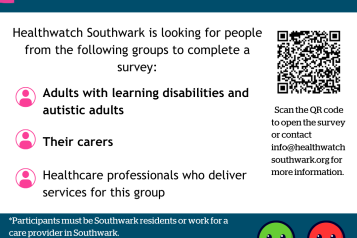
Healthwatch Southwark listens to people’s real experiences of health and social care services and feeds those insights directly into the people who plan, commission and run services. Whether an experience was positive, frustrating, or somewhere in between, it helps highlight what needs attention.
So what can you do?
If you live in Southwark and have experience of health or social care – as a service user, carer, family member or supporter – your voice matters.
You can help shape what care where we live actually looks like by sharing:
- What worked well
- Where you struggled
- What dignity means to you in practice
- What would have made a difference
👉 Please get in touch with Healthwatch Southwark and share your thoughts and feedback about local services.
👉 You can also directly share your views with the Casey Commission, as an individual or organisation, using this link below: